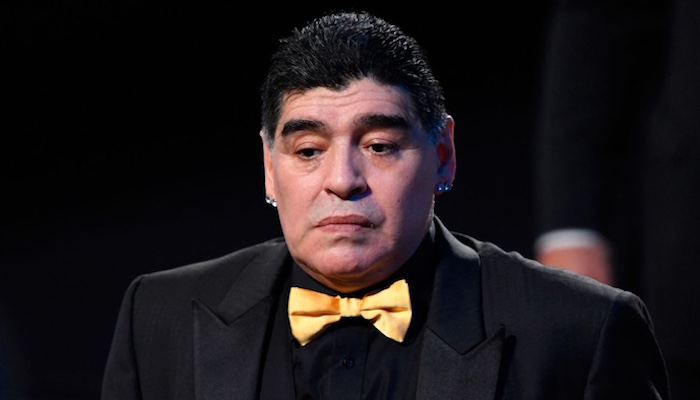
The trial investigating the death of Argentine football icon Diego Maradona took a significant turn on Thursday after a psychologist testified about the late star’s mental health condition and treatment requirements.
Carlos Diaz, one of seven medical professionals facing manslaughter charges with reckless intent, told a Buenos Aires court that Maradona had been diagnosed with bipolar disorder and displayed narcissistic traits. He argued that these conditions played a central role in shaping the treatment approach provided during the final weeks of the football legend’s life.
Diaz, 34, who is accused of prescribing inappropriate medication, emphasized that Maradona required a strict zero-alcohol regime. He warned that even minimal alcohol intake could have posed serious health risks.

Recounting his first consultation with Maradona on October 26, 2020—less than a month before the former player’s death—Diaz described finding him at home drinking wine. He told the court that despite this, Maradona had expressed a desire to improve his lifestyle, and the treatment strategy was built around achieving sobriety.
He also referenced toxicology results suggesting Maradona had not used drugs for 23 days prior to his death.

Maradona, who is celebrated globally for his football legacy with clubs such as Boca Juniors, Barcelona, and Napoli, and for leading Argentina to victory in the 1986 FIFA World Cup, died on November 25, 2020, at the age of 60. His death followed surgery for a subdural haematoma.
The ongoing trial is examining whether negligence or misconduct by members of his medical and care team contributed to his death. Neurosurgeon Leopoldo Luque, also on trial, defended the decision to provide home-based care, insisting it was never intended to replicate an intensive care environment.
As the proceedings continue, the case remains under intense public scrutiny in Argentina, raising wider questions about medical responsibility and the treatment of high-profile patients.