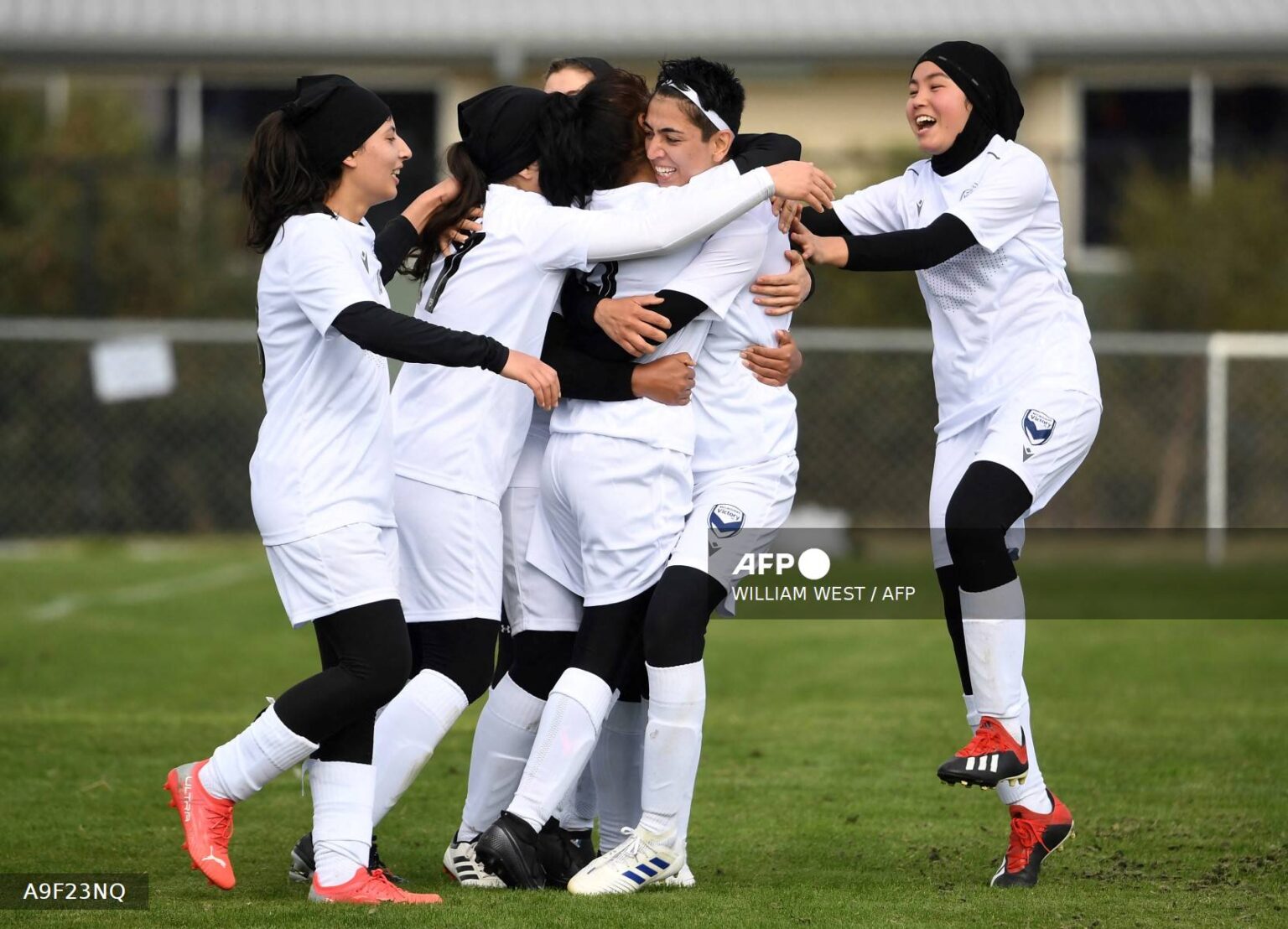
A landmark decision by FIFA has opened the door for Afghanistan’s women footballers to compete in official international matches, in what former captain Khalida Popal describes as a “historical moment.”
The new rule change means Afghanistan’s women’s team can now pursue qualification for major tournaments such as the FIFA Women’s World Cup and the Olympics—an opportunity long denied due to political restrictions.
Speaking from Copenhagen, Popal reflected on the significance of the decision, calling it the result of years of struggle. She described the breakthrough as a victory not just for athletes, but for fundamental rights.

Founded in 2007 in Kabul, Afghanistan’s women’s national team once symbolized progress in the country. However, after the Taliban returned to power in 2021, women were banned from participating in sports, forcing players into exile.
Roughly 100 players and their families were evacuated to Australia, while others resettled across Europe, the United Kingdom, and the United States. Despite displacement, the athletes regrouped, forming a refugee squad that played in exhibition matches, including at the FIFA Unites Women’s Series in Morocco.

Until now, FIFA regulations required approval from the طالبان-controlled Afghanistan Football Federation for official participation—effectively blocking the team. The latest amendment, agreed in partnership with the Asian Football Confederation, removes that barrier.
The rule is designed not only for Afghanistan but also for teams facing exceptional political or structural challenges, ensuring players are not excluded from international sport due to circumstances beyond their control.
Popal emphasized that the decision represents a turning point for displaced Afghan athletes. With players scattered globally, the team aims to rebuild and identify talent from the diaspora, with trials expected ahead of potential matches as early as June.
Although Afghanistan will not be eligible for the 2027 Women’s World Cup, the team can now set its sights on future tournaments—an opportunity once thought impossible.
FIFA president Gianni Infantino described the move as “a powerful and unprecedented step in world sport,” underscoring the organization’s commitment to protecting the right of women and girls to play football worldwide.
For Afghanistan’s women footballers, the decision signals more than a return to the pitch—it represents recognition, resilience, and a renewed path forward.