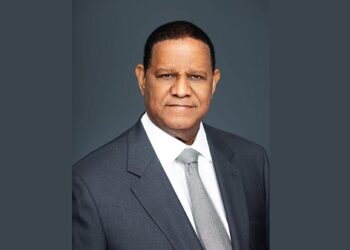
The public endorsement of Senator Olamilekan Adeola by Governor Dapo Abiodun was expected to signal continuity and political stability ahead of the 2027 elections. Instead, it has exposed a deeper and more complex public mood across Ogun State—one defined less by enthusiasm and more by growing fatigue.
While the endorsement drew applause at a recent APC stakeholders’ meeting, observers say the reception reflected more than political support. For many residents, particularly in economically active areas, it signaled a quiet протест against the current administration’s perceived shortcomings.
Across the state, concerns are mounting that development efforts under the Abiodun administration have lacked coordination and strategic focus. Though the government can point to completed projects and ongoing initiatives, critics argue that impact—not activity—is the true measure of governance.

This perception is especially pronounced in key border communities linking Ogun to Lagos. In areas such as Ado-Odo/Ota and Ifo, residents report stark contrasts in infrastructure quality, with functional systems on the Lagos side giving way to deteriorating conditions immediately upon crossing into Ogun.

The Agbado corridor illustrates this divide. While Lagos has expanded its urban rail network to boost mobility, complementary infrastructure on the Ogun side remains underdeveloped, limiting the potential economic benefits for residents and businesses.
Analysts note that infrastructure works best as an interconnected system. Roads, transport networks, and rural access routes must align to support commerce and mobility. Where projects are isolated or poorly integrated, their economic value diminishes significantly.
Several major routes—including the Sango-Ota–Ijoko corridor and the Ota-Idiroko Expressway—have become focal points of criticism, with residents questioning why critical economic arteries have seen limited progress over the past seven years.
In industrial hubs like Ota, the implications are particularly severe. Businesses face rising logistics costs, while workers endure long and difficult commutes. Investors, meanwhile, encounter inefficiencies that undermine the area’s economic potential.
Rural communities face a different but related challenge. In parts of Yewa North, newly constructed roads lack effective connections to major transport corridors, restricting farmers’ access to key markets such as Lagos. As a result, infrastructure that exists physically often falls short economically.
Within this context, Adeola’s emergence is being interpreted by some not as a vote of confidence in his track record, but as a reflection of public desire for change. Analysts suggest that the support he enjoys is driven less by familiarity and more by a growing dissatisfaction with the current administration’s priorities.
As the 2027 political landscape begins to take shape, the conversation in Ogun appears to be shifting—from continuity to correction. Voters are increasingly focused on practical concerns: infrastructure alignment, project completion, and economic relevance.
For many, the condition of roads across the state has become a powerful symbol of governance itself. From border towns to rural communities, these networks tell a story that challenges official narratives of progress.
The endorsement of Olamilekan Adeola may have been intended to unify political ranks, but it has also highlighted a critical reality: public confidence cannot be sustained by isolated achievements.
As one analyst put it, the applause may be loud—but the message beneath it is unmistakable.