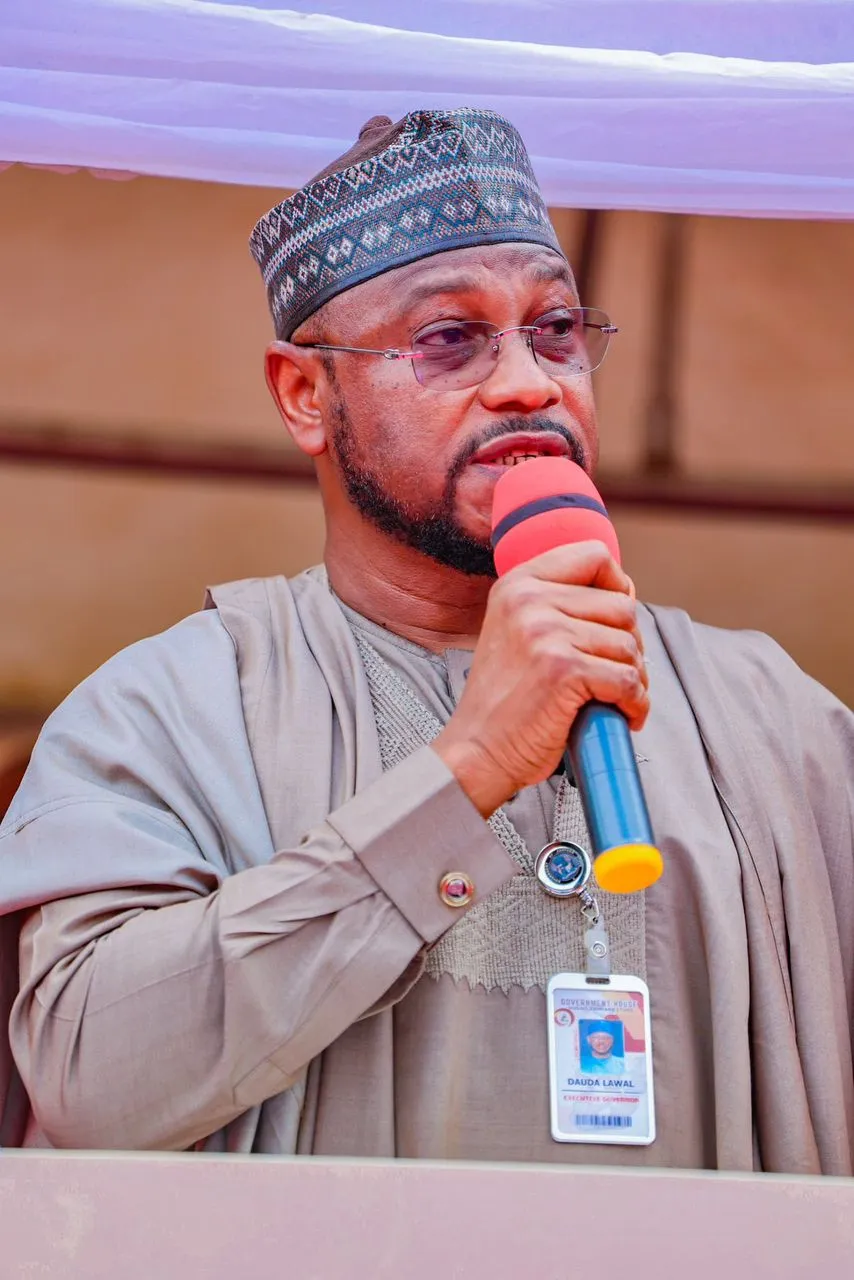
Just a few years ago, Zamfara State’s education system stood on the brink of collapse—crippled by debt, abandoned schools, and a generation of students locked out of opportunity. Today, the narrative is shifting dramatically, driven by sweeping reforms under Governor Dauda Lawal.
When Lawal assumed office in 2023, the sector was described by many as “clinically dead.” Schools were dilapidated, teachers were scarce, and thousands of students were unable to sit for critical examinations due to unpaid fees owed to West African Examinations Council and National Examinations Council. The consequences were severe: withheld results, disrupted academic futures, and dangerous journeys by students seeking alternatives in neighboring states.
In a decisive intervention, the Lawal administration cleared a backlog of ₦1.4 billion owed to WAEC and over ₦1.34 billion to NECO, settling debts accumulated over several years. The move led to the immediate release of withheld results, enabling affected students to pursue higher education. Additionally, the government fully funded the 2024 WAEC examinations, removing financial barriers for candidates.

Beyond debt repayment, the administration declared a state of emergency in education in November 2023, signaling a shift from rhetoric to action. Over 500 schools across Zamfara’s 14 local government areas are currently undergoing construction or renovation. These projects, backed by investments exceeding ₦5.9 billion through partnerships and intervention programs, aim to provide modern and safe learning environments.
The reforms extend to learning conditions. More than 12,000 student desks and 1,000 teacher chairs have been distributed, replacing the long-standing practice of pupils sitting on bare floors. At the same time, the government has recruited 2,000 qualified teachers, with an initial focus on core subjects such as Mathematics, English, Physics, and Chemistry—key areas for future workforce competitiveness.

Financial commitment to the sector has also increased significantly. In the 2025 fiscal year, education received ₦79.6 billion—14% of the total budget—making it the single largest allocation. Plans are underway to sustain the momentum with an additional ₦65 billion proposed for 2026.
Despite these gains, challenges remain. Experts note that sustaining progress will require continuous teacher training, effective maintenance of school infrastructure, and stronger legislative backing, including the pending Education Sector Bill aimed at streamlining the system from early childhood to tertiary level.
Observers say the reforms mark a turning point for Zamfara, transforming a once-neglected sector into a foundation for long-term development. However, they caution that consistency will be key to ensuring that recent gains are not reversed.
As political activities gradually build toward 2027, the future of Zamfara’s education system may hinge on whether current reforms are sustained—or interrupted. For now, the state appears to be charting a new course, one classroom at a time.