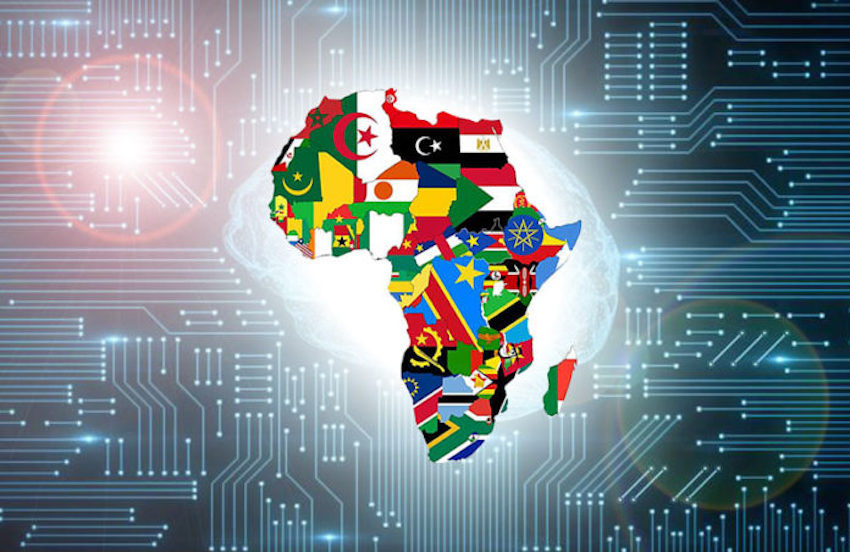
Inequality in global economics continues to sideline Africa, exposing deep flaws in the rule-based world order. A shift towards equity and unity is long overdue
Inequality in Global Economics continues to cast a long shadow over Africa’s place in the international power equation, reinforcing its role as a marginalized player in a world order shaped by economic dominance, political hegemony, and historical debts.
Also read: Understanding Economics Of SAA To Vessel Owners, FG
At birth, all humans may share the same biological template but as one anonymous quote rightly notes, equality ends at birth. Societies stratify. Economies diverge.

Inherited wealth and geographic luck turn some into masters of the game, while others, particularly nations in Africa, are left to grapple with the consequences of being at the tail end of a global economic equation.
The United States, widely recognized as the chief architect and enforcer of the rule-based world order, balances what one might call “sword and equity.”

After World War II, it extended goodwill to both allies and former enemies alike, establishing institutions and alliances that formalized the G7’s power.
Even defeated nations like Germany and Japan earned a seat at the table, while Africa was given a symbolic handshake, not an equal seat.
The current system plays out like a quadratic function, where the “head” the powerful and the “middle” emerging economies suppress the “tail” Africa, Latin America, and parts of Asia.
Africa’s GDP, at $3 trillion, is a mere 2.5% of the global GDP exceeding $120 trillion, despite its vast natural resources and 1.4 billion people.
Economic voices like Professor Pat Utomi and political analysts have expressed concern over Africa’s failure to assert itself.
The key lies in “juggling and redirecting incentives,” Utomi argues a phrase that captures both the root of the problem and a possible path forward.
While the U.S. under former President Donald Trump pursued tariff-based protectionism as an incentive mechanism, African nations suffer from disincentives such as capital flight, corrupt elite enrichment, and externally set commodity prices.
It’s estimated Africa loses over $60 billion annually in illicit capital outflows, while hedge funds operate with the short-term intent of extracting profits and fleeing.
Staggering individual wealth among African elites like Joseph Kabila and Isabel dos Santos each allegedly worth over $24 billion represents a direct contradiction to the continent’s underdevelopment.
Much of this wealth sits in foreign banks, further incentivizing the West while disincentivizing growth at home.
And while global tech giants like Google rely on African minerals lithium, cobalt, uranium, and more those resources are priced through capitalist, not humanistic lenses, ignoring environmental cost and generational equity. It’s the equivalent of setting a price on oxygen profitable but ultimately unsustainable.
If the West truly seeks a win-win paradigm, it must move away from the zero-sum game model. The current power dynamic thrives on maintaining Africa’s marginal status.
But a united Africa, leveraging its natural wealth and negotiating power, could shift the equation toward a “0.5-sum” model a state of quasi-equality.
Also read: Nigerian Student Loan Policy Sparks Emotional Reaction from Private College Head
Tariffs, debt policies, and incentive realignment must serve Africa’s development, not its depletion. Only then can the continent rewrite its role from exploited resource base to equal global player.