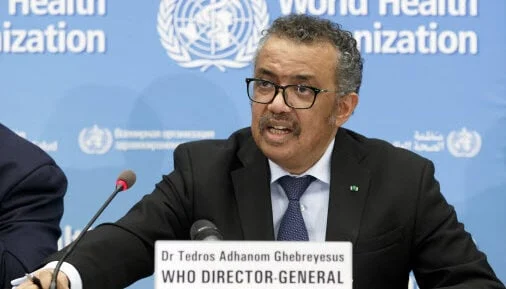
The world may be edging closer to another pandemic as global health financing deteriorates, the World Health Organisation (WHO) has warned.
Addressing the opening of the WHO Executive Board meeting in Geneva on February 2, Director-General Tedros Ghebreyesus described 2025 as “one of the most difficult years” in the agency’s history, citing sudden and severe cuts to bilateral aid.
“These cuts have caused huge disruptions to health systems and services in many countries,” he told health ministers and diplomats.

Funding Cuts Shake Global Health Systems
According to WHO data, an estimated 4.6 billion people still lack access to essential health services, while 2.1 billion face financial hardship due to healthcare costs.
A projected global shortage of 11 million health workers by 2030 — more than half of them nurses — further threatens pandemic prevention, detection and response efforts.

The situation has been compounded by major shifts in international health financing. In January, the United States formally withdrew from the WHO, ending decades of support as one of its largest contributors. The US previously covered nearly 20 per cent of the agency’s budget.
The withdrawal has forced WHO to plan a 21 per cent budget cut for the 2026–27 cycle, triggering staff and programme reductions across regions.
Surveys conducted by WHO in 2025 across 108 low- and middle-income countries revealed that funding cuts have reduced essential services — including maternal care, vaccination, emergency preparedness and disease surveillance — by up to 70 per cent in some areas.
Additionally, 70 per cent of countries reported disruptions to emergency preparedness, while 66 per cent experienced setbacks in public health surveillance.
Lessons from COVID-19 and Ebola
Health experts warn that pandemics are not just medical crises but social and economic shocks that test governance systems and deepen inequality.
The COVID-19 pandemic exposed gaps in healthcare funding, especially in low- and middle-income countries where access to vaccines, testing and treatment was limited. Similarly, the Ebola outbreak in West Africa between 2014 and 2016 highlighted the consequences of fragile health systems and delayed responses.
On malaria control, WHO reports indicate that previous investments helped prevent more than two billion cases and nearly 13 million deaths. However, funding delays now threaten planned preventive campaigns and the distribution of insecticide-treated nets.
Experts caution that reductions in global health aid could lead to millions of additional tuberculosis and infectious disease cases over the next decade.
Nigeria Urged to Strengthen Local Health Systems
The funding crisis has also reignited concerns in Nigeria following the recent death of soprano singer Ifunanya Nwangene, reportedly linked to the unavailability of snake antivenom.
Public health advocates argue that Nigeria must treat the global funding downturn as an opportunity to invest in local research, pharmaceutical production and resilient health systems.
Strengthening community clinics, national laboratories and disease surveillance mechanisms, alongside tackling corruption and wasteful spending, are seen as critical steps to safeguarding the country against future pandemics.
As global interconnectedness accelerates disease spread, experts say preparedness, sustained investment and international cooperation remain the world’s strongest defence against the next health emergency.