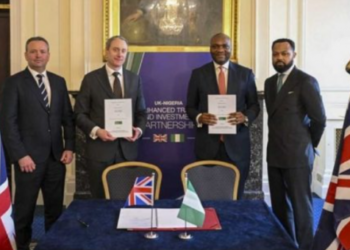
Nigeria and the United Kingdom have taken a major step toward resolving a £1.2 billion trade discrepancy, agreeing to establish a structured data-sharing framework to improve transparency and efficiency in bilateral commerce.

The agreement was reached during a high-level meeting in London on March 18, 2026, held on the sidelines of President Bola Tinubu’s State Visit. The talks were conducted under the Nigeria–United Kingdom Enhanced Trade and Investment Partnership (ETIP), signalling a renewed push for stronger customs collaboration.
According to a statement by Nigeria Customs Service spokesperson Abdullahi Maiwada, the discussions were led by Comptroller-General of Customs Adewale Adeniyi and Ms Megan Shaw of His Majesty’s Revenue and Customs. Key focus areas included customs modernisation, improved data transparency, and expanded operational cooperation.

At the centre of the engagement was a significant discrepancy in trade figures. Nigeria recorded about £504 million in imports from the UK in 2024, while the UK reported exports to Nigeria worth approximately £1.7 billion within the same period — leaving a gap of around £1.2 billion.
Both countries described the mismatch as a structural issue requiring coordinated action. To address it, they agreed to explore a pre-arrival data exchange system that will link their digital customs platforms, enhancing risk management, data reconciliation, and compliance monitoring.
Adeniyi emphasised the importance of the initiative, noting that effective customs cooperation is critical to economic growth and sustainable trade. He added that customs authorities play a frontline role in ensuring trade flows remain secure, transparent, and mutually beneficial.
The meeting also highlighted technological advancements, with the UK showcasing innovations such as artificial intelligence-driven trade tools, digital verification systems, and real-time analytics designed to improve cargo processing and border security.
Beyond tackling the data gap, both sides agreed on several concrete measures, including the development of a Customs Mutual Administrative Assistance Framework, technical collaboration for capacity building, and the creation of a joint engagement mechanism under ETIP.
The Nigeria Customs Service said the outcomes would strengthen its modernisation agenda and enhance efficiency across the country’s ports and trade ecosystem. It also reaffirmed its commitment to international partnerships aimed at boosting transparency, facilitating trade, and supporting Nigeria’s broader economic reform goals.