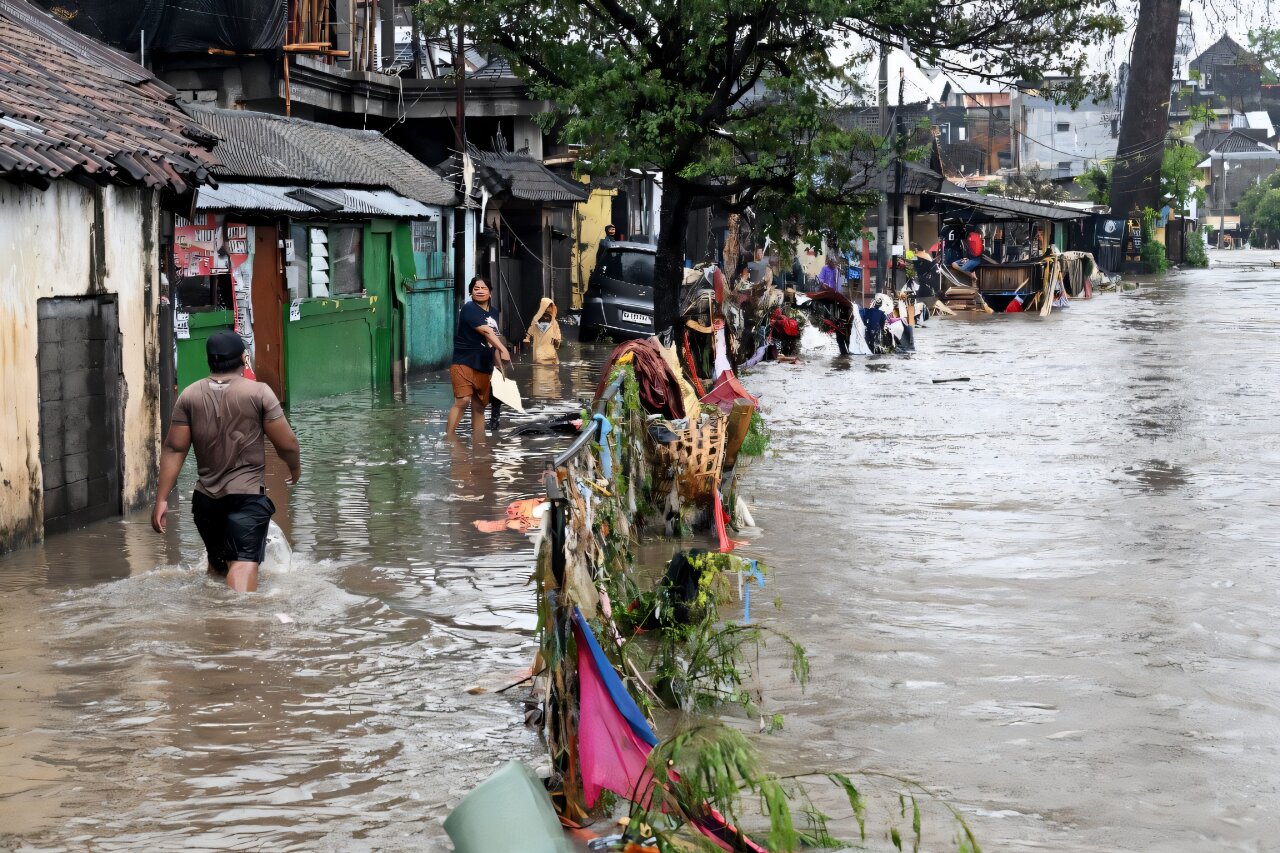
Indonesia flood death toll rises to 23 after torrential rain hits Bali and Flores. Landslides and debris hamper rescue efforts as five remain missing
Indonesia flood death toll has risen to 23 following torrential rains and landslides that devastated parts of Bali and Flores islands this week, officials confirmed on Friday.
Also read: Adamawa Flood Victims Struggle for Shelter, Food, Safety
According to the country’s National Disaster Mitigation Agency (BNPB), flash floods and landslides struck the region after intense downpours late Tuesday, leaving a trail of destruction and displacing communities.

Four more bodies have since been recovered, with five people still missing.
Bali, a renowned global tourist destination, bore the brunt of the disaster with 14 confirmed fatalities, while five deaths were reported on neighbouring Flores island, BNPB stated.

BNPB chief Suharyanto, who like many Indonesians goes by a single name, said the agency has deployed emergency aid including food, clothing, and bedding to the affected areas.
He estimated financial losses at around 25 billion rupiah (£960,000).
In Nagekeo district of Flores, search and rescue teams continue to battle through heavy debris in the hunt for three still-missing victims.
Efforts have been hampered by the scale of damage and unstable terrain.
The deluge is part of Indonesia’s annual monsoon season, which typically spans November to April, often bringing flash floods, landslides, and outbreaks of waterborne diseases.
Experts say climate change is intensifying storm patterns, prolonging rainy seasons and increasing the severity of natural disasters across the region.
The Indonesian archipelago, home to over 17,000 islands, is particularly vulnerable due to its mountainous terrain and densely populated riverbanks.
Earlier this year, flooding in Central Java claimed 25 lives in January, and in March, three people were killed when two dozen towns across Java were submerged.
Also read: Gombe Teenage Flood Tragedy Sparks Investigation After Lifeless Body Found
The government has called for improved early warning systems and sustainable land use practices as it faces growing pressure to tackle climate-driven risks.