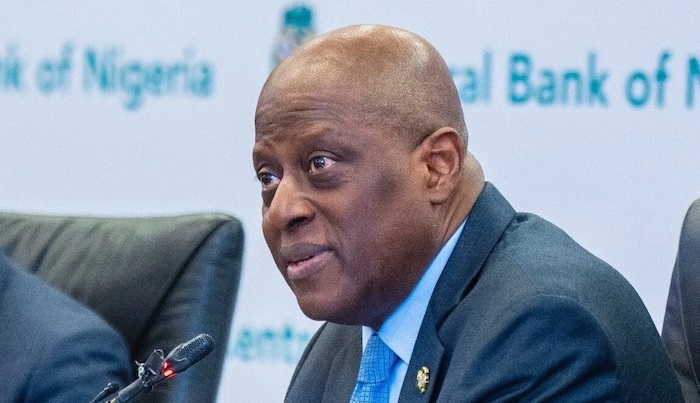
The Central Bank of Nigeria (CBN) has unveiled an ambitious monetary policy agenda for 2026, setting its sights on reducing inflation to single-digit levels, stabilising the naira, and strengthening the country’s financial system.
CBN Governor, Olayemi Cardoso, announced the roadmap at the First Monetary Policy Forum held in Abuja, while cautioning that geopolitical tensions in the Middle East could threaten Nigeria’s economic outlook through fluctuations in global oil prices.
Cardoso said the apex bank’s next phase will focus on consolidating recent economic gains, with a commitment to sustaining declining inflation, maintaining exchange rate stability, and improving liquidity within the banking sector.

“Our next phase is focused on consolidation: anchoring inflation firmly on a downward trajectory toward a single-digit level, sustaining exchange-rate stability, strengthening reserve buffers through organic inflows, deepening interbank market development, and enhancing the robustness of our monetary-policy transmission,” he stated.
Nigeria’s inflation rate currently stands at 15.06 per cent, underscoring the scale of the challenge ahead.

The CBN governor emphasised that achieving these targets would require strong collaboration between monetary and fiscal authorities, alongside disciplined policy implementation and continuous stakeholder engagement.
Despite prevailing risks, Cardoso expressed cautious optimism about the economy, noting that global growth is projected at 3.3 per cent, although it may be constrained by tight financial conditions, past monetary tightening, and ongoing geopolitical uncertainties.
Also speaking at the forum, Minister of Finance and Coordinating Minister of the Economy, Wale Edun, said the Federal Government is pursuing robust economic growth aimed at improving living standards.
According to him, the government is targeting a Gross Domestic Product (GDP) growth rate of about 7 per cent—roughly double the current inflation rate—to lift millions of Nigerians out of poverty.
Edun stressed that policymakers must carefully balance inflation control with economic expansion, noting that similar challenges have been faced globally, including in the United States following the COVID-19 pandemic.
He highlighted interest rates as a key tool in managing inflation, explaining that while higher rates increase borrowing costs, they are necessary to curb price pressures. However, he added that rates could gradually decline as inflation eases and economic reforms take hold.
The minister also underscored the importance of institutional collaboration in achieving macroeconomic stability, noting that no single agency can deliver sustainable economic progress alone.
He welcomed ongoing reforms in the foreign exchange market, saying improved transparency would enhance investor confidence, reduce uncertainty, and support lower inflation.
Edun further commended the CBN’s move toward an inflation-targeting framework, describing it as a critical step to boost policy credibility, improve communication, and attract long-term investment into the Nigerian economy.