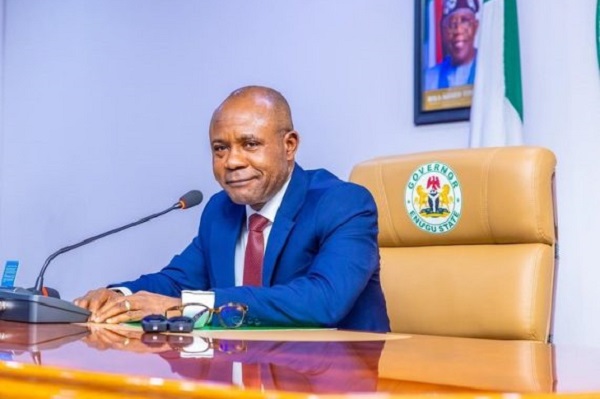
When Peter Ndubuisi Mbah assumed office on May 29, 2023, Enugu State was widely known as a civil service-driven economy, heavily reliant on federal allocations and public sector jobs.
Infrastructure deficits, chronic water scarcity, and the disruptive “sit-at-home” orders had slowed economic activity, while youth migration drained the state of talent.
Less than three years later, the narrative is rapidly changing.

Under Mbah’s leadership, Enugu is repositioning itself as a hub for investment, innovation, and high-quality living—drawing comparisons to Lee Kuan Yew, the architect of modern Singapore’s transformation.
With a bold target to grow Enugu’s GDP from $4.4 billion to $30 billion by 2031, Mbah has pursued aggressive reforms anchored on infrastructure, private-sector growth, and human capital development.

The state’s budget has surged from ₦166 billion in 2023 to ₦1.62 trillion in 2026, with a strong emphasis on capital expenditure—consistently above 80 per cent. This shift reflects a deliberate move away from recurrent spending toward infrastructure and economic enablers.
Internally Generated Revenue (IGR) has also seen a sharp rise, growing from ₦26.8 billion in 2022 to over ₦400 billion, driven by digitisation, improved tax systems, and revival of dormant assets.
Over 1,000 kilometres of roads have been constructed or rehabilitated, linking rural and urban economies. Water production has expanded from just 2 million litres to over 120 million litres, addressing decades of scarcity.
The administration has also introduced modern transport systems, including five new terminals and CNG-powered buses, while rolling out plans for eco-friendly taxis.
A major highlight is the launch of Enugu Air in 2025, with plans to expand its fleet and position the state as a regional aviation hub.
The flagship New Enugu City project—spanning 10,000 hectares—aims to create a modern, investment-ready metropolis with residential zones, industrial parks, and dedicated power infrastructure.
In education, over 265 Smart Green Schools have been built across wards, offering free tuition, digital learning tools, and meals. Budgetary allocation to education has consistently exceeded global benchmarks.
Healthcare has also received a boost with 260 primary health centres and a nearly completed 300-bed international hospital designed to tap into Nigeria’s outbound medical tourism market.
Mbah’s administration is pushing a digital transformation agenda, training thousands of youths in tech skills and hosting innovation-driven initiatives.
A key milestone is the partnership with Haier Group to establish a manufacturing facility in Enugu, signalling growing investor confidence.
The government has tackled insecurity, including the enforcement against illegal sit-at-home orders, while deploying AI-powered surveillance and response systems.
Land administration reforms, powered by digital platforms, have simplified processes and improved investor confidence, alongside laws to curb land grabbing.
Tourism development has gained momentum with upgrades to iconic sites like the Ngwo Pine Forest, Nsude Pyramids, and Awhum Waterfalls, alongside the revitalisation of hospitality infrastructure.
Agriculture reforms include smart farm estates, tractor assembly initiatives, and digital farmer registration to boost agro-industrial value chains.
Analysts say the most striking shift is Enugu’s transition from a consumption-based economy to a productivity-driven one. Mbah’s governance style—focused on meritocracy, performance, and private-sector efficiency—marks a departure from traditional political models.
While challenges remain, the transformation underway positions Enugu as a potential model for subnational development in Nigeria.
If sustained, observers believe the state could emerge as a leading economic hub not just in Nigeria, but across Africa.