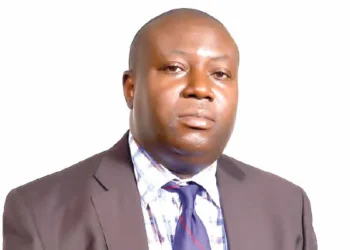
Nigerian Armed Forces to gain full access to National Health Insurance, enhancing healthcare coverage for soldiers, families, and retirees
The Nigerian Armed Forces will soon be fully integrated into the National Health Insurance Authority (NHIA), guaranteeing comprehensive healthcare access for service members, their families, and eligible retirees, the Federal Government has assured.
Also read: Nigerian Marketing Awards Celebrates Inclusion with Expanded 2025 Council
This commitment was made by the Minister of State for Defence, Bello Matawalle, on Tuesday during Abuja’s 20th anniversary celebration of the Ministry of Defence Health Implementation Programme in partnership with the Walter Reed Army Institute of Research Africa.

Highlighting the significance of this initiative, Matawalle said the integration would bolster Nigeria’s defence health system, ensuring military personnel enjoy the same health safeguards afforded to other Nigerian citizens under the NHIA.
“We must shape the next 20 years with national security and the National Health Insurance Authority, ensuring our forces are covered by national health and well-being safeguards for service members, their families, and eligible civilians—extending across postings and into retirement,” he emphasised.

The minister underscored that the health of the armed forces is a vital pillar of national security, adding that preventive healthcare and insurance coverage are essential to maintaining operational readiness.
“The health of our armed forces is preserved for the security of our nation. When illness is prevented, protection and unity remain operational missions,” Matawalle added.
The longstanding partnership between the Ministry of Defence and Walter Reed has already positively impacted over half a million Nigerians—both military personnel and civilians—by saving lives, improving healthcare infrastructure, and boosting confidence in military-led medical services.
Chief of Defence Staff, General Christopher Musa, described the NHIA integration as a crucial milestone in ensuring soldiers remain fit to defend the nation.
He praised the 20-year partnership with Walter Reed as a model of international collaboration that has transformed Nigeria’s military health system.
“The partnership, founded on service, science, and sacrifice, has strengthened 32 military health facilities nationwide, extended benefits to civilian communities, and preserved thousands of lives through interventions in HIV prevention, COVID-19 response, and other disease outbreaks,” Musa explained.
He highlighted investments in research, laboratory infrastructure, and professional training that have positioned Nigeria to better handle future health crises.
Notably, the Defence Reference Laboratory in Abuja, accredited by the American Association for Laboratory Accreditation, stands as a beacon of excellence.
US Ambassador to Nigeria, Richard Mills Jr., praised the partnership as a testament to mutual trust and respect, emphasising its role in preserving military readiness and combating global health threats.
Major General Paula Lodi, Commanding General of the US Army Medical Research and Development Command, noted the partnership’s evolution since 2005 to address HIV, malaria, and other infectious diseases, while strengthening health systems beyond Nigeria’s borders.
Since the programme’s inception, over 1.6 million clients have been tested and counselled for HIV, with more than 110,000 positive cases identified and nearly 70,000 patients initiated on Antiretroviral Therapy (ART).
Significant strides have also been made in preventing mother-to-child transmission of HIV.
Matawalle said these achievements highlight the importance of integrating military personnel into the NHIA to ensure sustainable care and operational effectiveness.
Also read: Speaker Obasa Toasts to Nigeria-China Strategic Partnership at China’s 76th Anniversary
“As we mark this anniversary, we renew our resolve to keep the health of our armed forces central to national defence. The force that guarantees peace is resilience and mission orientation. Let us commit to building a defence health system that is robust, innovative, and prepared for future threats, while safeguarding the wellbeing of those who serve our nation,” he concluded.