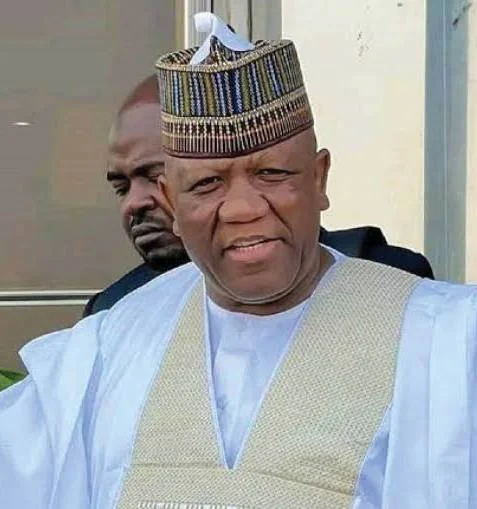
At a time when political actors frequently align with power for strategic gain, Yari—who represents Zamfara West in the Senate—has consistently demonstrated a brand of loyalty anchored in belief: belief in leadership, governance direction, and the necessity of reform.
This stance was recently underscored during a special prayer session organised by the Arewa Think Tank in Kaduna to mark Tinubu’s 74th birthday. Speaking through Senator Tijjani Kaura, Yari called on Nigerians to support the administration, stressing that the current government inherited deep structural challenges requiring bold and sometimes painful reforms.
For Yari, supporting the president goes beyond political alignment—it is about national interest. At the Kaduna gathering, he framed prayers for Tinubu as prayers for Nigeria, reinforcing his view that leadership stability is directly tied to national progress.

Central to his argument is the condition under which the Tinubu administration assumed office in 2023. According to Yari, Nigeria faced entrenched socio-economic and structural issues that demanded long-term reconstruction rather than short-term fixes. Using the analogy of a leaking roof, he suggested that only comprehensive reform—not temporary relief—can secure the country’s future.
What distinguishes Yari in Nigeria’s political landscape is not just his support for Tinubu, but the consistency of that support. Having served as a member of the House of Representatives, two-term governor of Zamfara State, and now senator, Yari is widely regarded as a seasoned political figure with little left to prove.

Unlike many politicians whose loyalty is often tied to personal advancement or expected rewards, Yari’s backing of Tinubu appears to transcend such motivations. His political trajectory suggests he is no longer driven by the pursuit of higher office, making his steadfast alignment more notable.
Even more striking is that his support predates Tinubu’s presidency. At a time when political alliances were fluid and uncertain, Yari aligned early—and has maintained that position through the complexities of governance.
In Nigeria’s often volatile political environment, such consistency carries risks. Reform policies frequently attract criticism, especially when their immediate impact is felt by citizens. Yet Yari has continued to publicly defend and encourage the administration, from stakeholder engagements to symbolic gestures like participation in prayer gatherings.
His approach contrasts sharply with the prevailing model of transactional politics, where loyalty is often negotiated and withdrawn when expectations are unmet. Instead, Yari’s stance suggests a belief in Tinubu’s capacity to address Nigeria’s challenges—one that persists regardless of short-term outcomes.
While critics may question whether any political loyalty is entirely free of self-interest, Yari’s pattern of behaviour—marked by consistency, risk-taking, and the absence of overt transactional expectations—signals a departure from the norm.
As President Tinubu navigates the complexities of reform and national rebuilding, allies like Yari may prove critical—not just for their support, but for the stability and confidence they bring to governance.
In a system often shaped by expediency, Yari’s brand of conviction-driven loyalty offers a different template—one that suggests there is still room for principle in Nigeria’s politics.