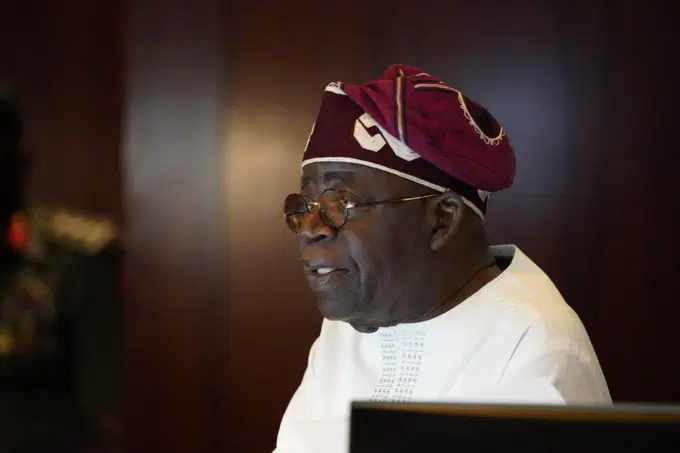
President Bola Tinubu has initiated what presidency sources describe as a far-reaching overhaul of Nigeria’s petroleum governance structure, following his executive order mandating the direct remittance of oil and gas revenues into the Federation Account.
Beyond the immediate fiscal reset, insiders confirm that preparations are underway for a comprehensive review of the Petroleum Industry Act (PIA), enacted in 2021 to modernise the sector.
“This executive order is the first corrective layer,” a senior Aso Rock official disclosed. “Where structural defects undermine constitutional order or fiscal stability, they must be revisited.”

Although the PIA was widely celebrated as a landmark reform, presidency sources say aspects of its revenue framework — particularly around Production Sharing Contracts (PSCs) — created unintended fiscal distortions.
Under post-PIA implementation, only 40 percent of PSC profit oil was remitted to the Federation Account, while 60 percent was retained by the Nigerian National Petroleum Company Limited (NNPC Ltd) split between a 30 percent management fee and a 30 percent Frontier Exploration Fund.

Financial submissions to the Federation Account Allocation Committee (FAAC) in 2025 reportedly put the affected revenue streams at approximately N14.57 trillion.
Presidency officials argue that such retention mechanisms disrupted fiscal balance between the Federation and its national oil company.
“When the Federation receives less than half of a major revenue stream before deductions, questions arise,” one adviser noted.
Legal advisers within government cite Sections 44(3) and 162 of the Constitution as central to the President’s action. Section 162 mandates that all revenues accruing to the Federation be paid into the Federation Account.
By invoking Section 5 of the Constitution, which vests executive authority in the President, Tinubu ordered immediate corrective measures while paving the way for legislative refinement.
“The sequencing matters,” a presidency source explained. “Revenue must first enter the Federation Account before any allocation.”
A key casualty of the executive order is the automatic 30 percent allocation to the Frontier Exploration Fund, previously earmarked for exploration in frontier basins outside the Niger Delta.
While officials acknowledge the importance of expanding reserves, they argue that funding mechanisms must align with constitutional and public finance principles. Future exploration financing is expected to be subject to transparent appropriation and legislative oversight.
Similarly, the automatic 30 percent management fee retained by NNPC on PSC profit oil and profit gas has been eliminated, reinforcing the company’s transition into a fully commercial entity.
“NNPC must operate as a business, not a quasi-fiscal authority,” a presidency adviser stated.
Presidency sources also expressed concerns over the shift to dividend-based inflows under post-PIA implementation, warning that corporate dividends cannot replace constitutionally mandated revenue streams.
“Dividends are not guaranteed. The Federation cannot depend on projected payouts,” an official said.
The new directive restores direct remittance of royalty oil, tax oil, profit oil and profit gas into the Federation Account.
State and local governments whose allocations depend on FAAC distributions are expected to benefit from the reset.
“With full remittance, the Federation Account reflects true earnings,” a source familiar with FAAC proceedings noted, describing the move as a boost to fiscal federalism.
The executive order also mandates that gas flare penalties collected by the Nigerian Upstream Petroleum Regulatory Commission be paid directly into the Federation Account, while spending from the Midstream and Downstream Gas Infrastructure Fund must comply with procurement laws.
An implementation committee has been approved to oversee execution, while consultations with lawmakers and stakeholders are expected as part of the broader PIA review.
Officials insist that the core objectives of the PIA attracting investment, modernising governance and improving sector efficiency — remain intact.
“What we are correcting are structural weaknesses that emerged during implementation,” a senior aide clarified.
For the Tinubu administration, the directive marks what insiders describe as a strategic first step toward aligning Nigeria’s petroleum framework with constitutional principles and long-term fiscal stability.