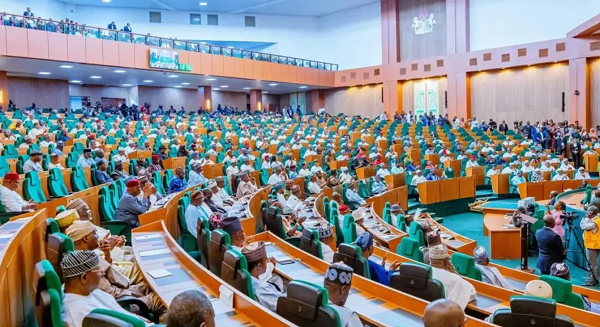

The House of Representatives has defended the delay in the passage of the Electoral Amendment (Reform) Bill, insisting that the process is deliberate and aimed at producing a credible and widely accepted legal framework for Nigeria’s electoral system.
The Green Chamber said the ongoing delay is due to efforts to harmonise diverse views and address shortcomings observed during the 2023 general election.

Speaking at the weekend in Ikole Local Government Area of Ekiti State, the House spokesman, Mr Akintunde Rotimi, explained that the delay was necessary to ensure the final version of the Electoral Amendment Bill 2026 strengthens transparency, credibility and efficiency in Nigeria’s democratic process.
Rotimi spoke while inaugurating road projects in Isaba and Oke-Ayedun communities, as well as a newly completed staff quarters at Odo-Oro High School, Odo-Oro.
Responding to concerns from Nigerians over why the Electoral Reform Bill has not been fully passed by the National Assembly, the lawmaker clarified that while the House of Representatives passed the bill before its December recess, the Senate is still finalising its own legislative process.
“The Electoral Reform Bill before the National Assembly is targeted at improving the transparency, credibility and efficiency of our democratic system, while also addressing the shortcomings exposed during the 2023 general election,” Rotimi said.
According to him, the reforms are comprehensive and stem from extensive consultations with key stakeholders across the country.
“The Joint House and Senate Committees on Electoral Reforms have met several times. We have held retreats and consultations with community leaders, civil society organisations and other interest groups. We are currently at the harmonisation stage, and this will be concluded very quickly,” he added.
Rotimi, who represents Ekiti North Federal Constituency (Ikole/Oye), emphasised that credible elections remain the cornerstone of democracy, noting that the Electoral Amendment Bill 2026 is designed to guarantee that Nigerians can vote freely and trust that their votes will count.
Highlighting his legislative record, the lawmaker disclosed that he has sponsored over 40 bills, including the Sexual Harassment (Prohibition) Bill for educational institutions, the Independent Candidacy Bill and the Whistleblowers’ Protection Bill.
Expressing satisfaction with the constituency projects he inaugurated, Rotimi said they were executed based on direct requests from residents, stressing that lawmakers were intentional about aligning constituency projects with the real needs of the people.
He also called on Nigerians to continue supporting the administration of President Bola Ahmed Tinubu, noting that sustained public support would enable the government to deliver more effectively on its promises.