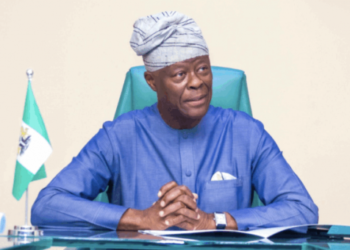
The Presidential Fiscal Policy and Tax Reforms Committee has refuted media reports alleging that the Minister of State for Finance, Taiwo Oyedele, admitted to errors in Nigeria’s newly introduced tax laws.
In a statement shared on Sunday via Oyedele’s official X account, the committee described the reports as inaccurate and a distortion of the minister’s remarks.
It stated that claims suggesting the minister acknowledged faults in the tax legislation or advised Nigerians to await the outcome of a supposed “legislative probe” were false, noting that the legislative process had already been completed and certified copies of the laws were published in early January 2026.

According to the committee, such misrepresentations risk misleading the public and undermining understanding of ongoing fiscal reforms.
The statement explained that Oyedele spoke during a fireside chat at the Nigerian Bar Association Section on Legal Practice conference in Lagos, where he highlighted early positive outcomes of the tax reforms.

These outcomes reportedly include a significant rise in informal sector registrations with the Corporate Affairs Commission, as well as an increase in registered taxpayers from around 10 million to over 100 million nationwide.
The committee attributed these developments to key provisions in the new tax framework, such as exemptions for small businesses and low-income earners, along with relief measures on essential goods and services.
It further noted that the reforms also include provisions exempting items like food, education, healthcare, transportation, and rent from certain taxes, as well as the introduction of a Tax Ombud to strengthen taxpayer protection.
While acknowledging progress, the committee emphasized that Oyedele recognized no legislation is perfect, stressing the importance of continuous stakeholder engagement and future amendments through Finance Bills where necessary.
The statement urged Nigerians to disregard sensational reports and rely solely on verified and official sources for accurate information on the tax reforms and other government policies.
The new tax laws, enacted in 2025 and implemented in January 2026, were designed to simplify Nigeria’s tax system, expand the revenue base, reduce multiple taxation, and ease burdens on small businesses and low-income earners.
However, concerns had earlier emerged when some lawmakers and professional bodies pointed to alleged inconsistencies between the harmonized bills passed by the National Assembly and the final gazetted versions, raising questions about possible discrepancies in the legislation.