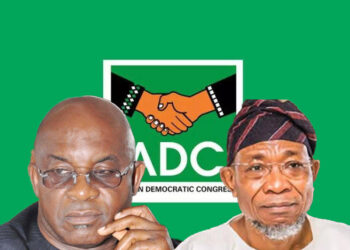
Isaac Fayose, brother of former Ekiti State Governor Ayodele Fayose, has expressed disappointment over the state of democracy in Nigeria, describing the opposition as weak, ineffective and increasingly irrelevant.

In a video shared on Instagram on Wednesday, Fayose lamented what he described as the collapse of Nigeria’s political and electoral systems, warning that recent developments have eroded the prospects of credible opposition and fair elections in the country.
“Opposition is gone. ADC is dead on arrival. Peter Obi can never be president. Nobody can be president again unless they select you,” he said.

Fayose criticised the National Assembly, particularly the Senate, for rejecting key electoral reforms, including proposals to make electronic transmission of election results mandatory — a measure widely viewed by stakeholders as critical to electoral transparency.
He also accused the judiciary of being weakened, arguing that the system no longer offers effective checks and balances on political power.
“We’ve finally lost Nigeria. Electoral reform is gone. Even what former President Goodluck Jonathan started has been thrown into the dustbin. No more BVAS. Whatever they tell you is the result,” he said.
Warning that Nigeria was drifting towards a one-party state, Fayose lamented what he described as the concentration of power in the hands of a few political actors.
“We are now back to a one-party state, one family to rule us forever. This is sad — the saddest day of my life,” he added.
His comments come amid renewed debate over the Electoral Act Amendment Bill 2026. Following pressure from the media and other stakeholders, the Senate passed the Electoral Act 2022 (Repeal and Re-enactment) Amendment Bill after its third reading but rejected a proposed amendment to Clause 60(3), which sought to make electronic transmission of election results mandatory.
Beyond electoral matters, Fayose also criticised the state of the judiciary, poor remuneration for medical professionals and the worsening security situation across the country, arguing that these challenges collectively signal that the country’s democratic foundations are under severe strain.
According to him, the developments reflect a nation that is rapidly losing its democratic safeguards.