The Nigerian Exchange (NGX) recorded an unprecedented surge in trading activity in 2025, with total market turnover more than doubling to an all-time high of N11.23 trillion, driven largely by increased participation from foreign investors.
Trading data obtained yesterday showed that the total value of transactions on the NGX jumped by 101 per cent from N5.587 trillion in 2024 to N11.23 trillion in 2025—the highest level in the history of the Nigerian capital market.
By comparison, total transactions stood at N3.578 trillion in 2023, N2.324 trillion in 2022, N1.899 trillion in 2021 and N2.168 trillion in 2020.
Market analysts attributed the record performance to a strong resurgence of foreign portfolio investors, whose participation in Nigerian equities climbed to its highest level in the past four years.
The market also achieved a major milestone in 2025 as foreign investors recorded net positive capital flows, reversing a long-standing trend in which outflows exceeded inflows. The development signalled growing confidence among foreign investors, who increasingly chose to retain their funds in the Nigerian market.
The surge in turnover further underscored the improving outlook for Nigerian equities, which closed 2025 as one of the world’s five best-performing stock markets. The NGX All-Share Index (ASI), Nigeria’s benchmark equities index, posted a full-year return of 51.19 per cent, translating to a net capital gain of N32.13 trillion.
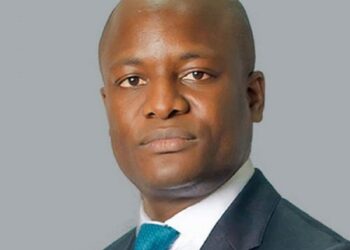
Group Managing Director of Nigerian Exchange Group (NGX Group) Plc, Mr. Temi Popoola, attributed the sustained rally to renewed investor confidence in Nigeria’s macroeconomic outlook.
“The Nigerian capital market in 2025 demonstrated resilience despite domestic and global economic headwinds,” Popoola said. “This performance underscores the importance of policy consistency, purposeful reforms and strategic collaboration in strengthening investor confidence and sustaining market growth.”
He noted that ongoing economic reforms, improved market structures and continued investment in technology helped create a stable environment for capital formation, while enhancing transparency, access and operational efficiency across the market.
Popoola commended President Bola Ahmed Tinubu for providing policy clarity and reform momentum that have boosted investor confidence, adding that the capital market has responded positively to improved macroeconomic coordination and clear reform direction.
He assured that NGX Group would continue to work with regulators and stakeholders to attract quality listings, deepen liquidity and expand retail participation, positioning the market as a catalyst for sustainable economic growth.
Chairman of the Association of Securities Dealing Houses of Nigeria (ASHON), Mr. Sehinde Adenagbe, said the strong market performance closely reflected the impact of the current administration’s economic reforms.
“Since President Tinubu assumed office in May 2023, Nigeria’s stock market has experienced strong growth and renewed investor interest,” Adenagbe said, noting that the NGX All-Share Index rose by about 136 per cent between 2023 and 2025.
He added that increased digitisation of the economy and capital market had eased access for Nigeria’s youthful population, particularly through fintech platforms supported by the NGX Group, thereby improving inclusiveness.
According to Adenagbe, the market’s performance mirrored improved macroeconomic conditions, liquidity and investor appetite, supported by key policy measures such as the enactment of the Investment and Securities Act (ISA) 2025, Nigeria’s removal from the Financial Action Task Force (FATF) grey list and reforms in the foreign exchange market.
He said greater transparency and stability in the forex market had reduced distortions, improved pricing predictability and encouraged increased foreign capital inflows into equities and other financial instruments.
However, Adenagbe called for additional supportive policies to sustain the momentum, including incentives for new listings—particularly the revival of moribund state-owned enterprises—and measures to encourage long-term institutional investment.
He also urged the government to clarify issues surrounding Capital Gains Tax and intensify efforts to tackle insecurity, noting that investors prefer secure and predictable environments.
Managing Director of GTI Capital, Mr. Kehinde Hassan, said investor behaviour indicated growing confidence in the outlook for the Nigerian economy, noting that the stock market often serves as a reflection of a country’s global economic standing due to investors’ sensitivity to risk.


NGX Turnover Hits Record N11.23trn as Foreign Investors Return in Force




Leave a Reply