For decades, Molete was more than a neighbourhood in Ibadan; it was the political soul of Oyo State. It was the homestead of the late Alhaji Lamidi Adedibu, the man many regarded as the ultimate gatekeeper of power in the state.
In his prime, no serious political ambition thrived in Oyo without a pilgrimage to Molete. Council chairmen, lawmakers, senators, even governors understood one immutable truth: Adedibu’s blessing was indispensable.
Dubbed the “Alaafin of Molete,” Adedibu wielded no crown, yet his authority often eclipsed that of crowned monarchs. His compound was a living institution, political headquarters, arbitration centre, welfare hub, and mass mobilization arena.

From dawn till dusk, Molete bustled with loyalists, party leaders, and the urban poor who found both hope and sustenance within Adedibu’s walls. Molete, under him, was power personified.
However, following Adedibu’s death in 2008, Molete lost its pulse. The once-thriving political nerve centre slipped into quiet irrelevance. His famed structure collapsed under the weight of internal fragmentation, while many of his protégés drifted away, abandoning both his political philosophy and party alignment. For nearly two decades, no figure emerged to command Molete—or Oyo politics with comparable authority. Efforts to recreate the “Molete model” failed, leaving a vacuum in grassroots leadership.

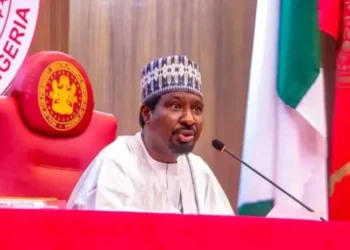
That vacuum, many now believe, is being deliberately and strategically filled by the Minister of Power, Chief Adebayo Adelabu.
On January 4, 2026, Adelabu staged what has since been described as a political and cultural rebirth: Molete Restoration Day 2026. More than a carnival-like concert, the event was a statement, symbolic, calculated, and deeply rooted in political memory. By choosing Molete as the stage, Adelabu was not merely hosting an event; he was resurrecting a legacy and reclaiming a historic political capital.
The gathering reawakened Molete’s long-dormant spirit. Music, crowd energy, symbolism, and grassroots presence converged in a manner reminiscent of the Adedibu era. It was a deliberate reminder that Molete still matters and that Adelabu understands the power of political history, community identity, and mass mobilization.
In doing so, Adelabu distinguished himself as more than a contemporary politician. He emerged as a custodian of political memory, a leader who honours past heroes while repositioning their strongholds for the future. Molete Restoration Day was, in essence, a declaration that Oyo’s political centre of gravity is shifting once again.
As the 2027 Oyo State governorship election approaches, Adelabu is clearly leaving nothing to chance. His move signals strength, structure, and grassroots sophistication, qualities long absent from the state’s opposition politics. Within Oyo’s political landscape, he is increasingly seen as a formidable force, capable of galvanising loyalty across wards and demographics.
More significantly, Adelabu’s resurgence in Molete suggests a broader ambition: to change the political fortune of Oyo State itself. With his growing influence and strategic positioning, the All Progressives Congress (APC) appears poised for a serious comeback, challenging the dominance of the Peoples Democratic Party (PDP).
In reviving Molete, Adelabu may well be reviving Oyo’s political future.