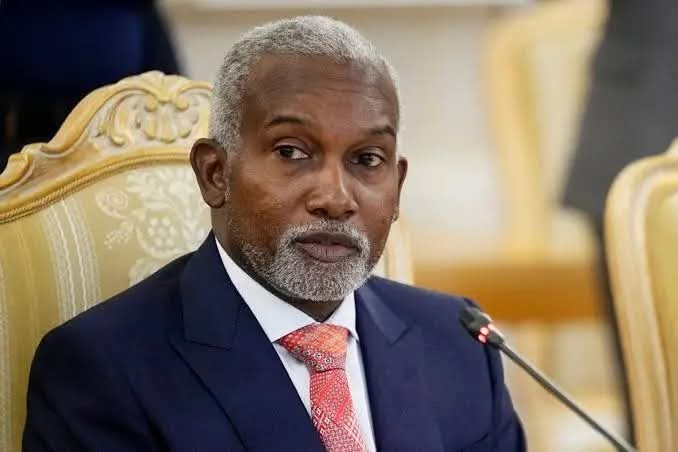
Nigeria’s Minister of Foreign Affairs, Yusuf Tuggar, has said the ongoing conflict in the Middle East highlights why Gulf oil and gas producers should see Nigeria as a strategic partner rather than a competitor in global energy supply.
Speaking amid escalating tensions involving Iran, Tuggar noted that disruptions to shipments through the Strait of Hormuz—a vital route for nearly a fifth of the world’s oil supply—have exposed vulnerabilities in global energy flows.
The conflict has forced some exporters to halt shipments, triggering price spikes and renewed concerns about supply security.

Tuggar said Nigeria’s vast untapped oil and gas reserves could provide Gulf states with an alternative source of hydrocarbons during such crises.
“It’s in line with what we’ve always advocated—that countries which might otherwise consider us competitors should partner with us and invest so they can diversify their market share, working with us,” he said.

Nigeria’s oil production has improved in recent years, rising to about 1.7 million barrels per day from roughly 1.4 million when President Bola Tinubu assumed office in 2023. The minister said further investment in oil fields and pipeline infrastructure could boost output even more.
While some analysts believe rising tensions between Iran and regional powers could slow Gulf investments in Africa, Tuggar argued that the situation could instead encourage stronger partnerships with energy-rich nations like Nigeria.
In January, Nigeria and the United Arab Emirates signed a Comprehensive Economic Partnership Agreement aimed at boosting trade and investment.
Investors linked to Qatar have also expressed interest in Nigeria’s gas sector, although project timelines remain uncertain.
However, analysts warn that large investment pledges in Nigeria often face long regulatory processes and execution challenges.
Tuggar acknowledged that global oil price increases have affected Nigeria because the country still imports large volumes of refined petroleum products, pushing up transport and food costs—especially during the Muslim fasting month of Ramadan.
He said Nigeria’s long-term resilience would improve as domestic refining expands. The privately owned Dangote Refinery, with a capacity of about 650,000 barrels per day, is expected to meet much of the country’s domestic fuel demand.
Despite global energy transition debates, Tuggar stressed that oil will remain central to the global economy for years to come.
“At the moment the world consumes about 105 to 106 million barrels per day. I don’t see that changing much anytime soon, so we need to work together so we have enough hydrocarbons available,” he added.