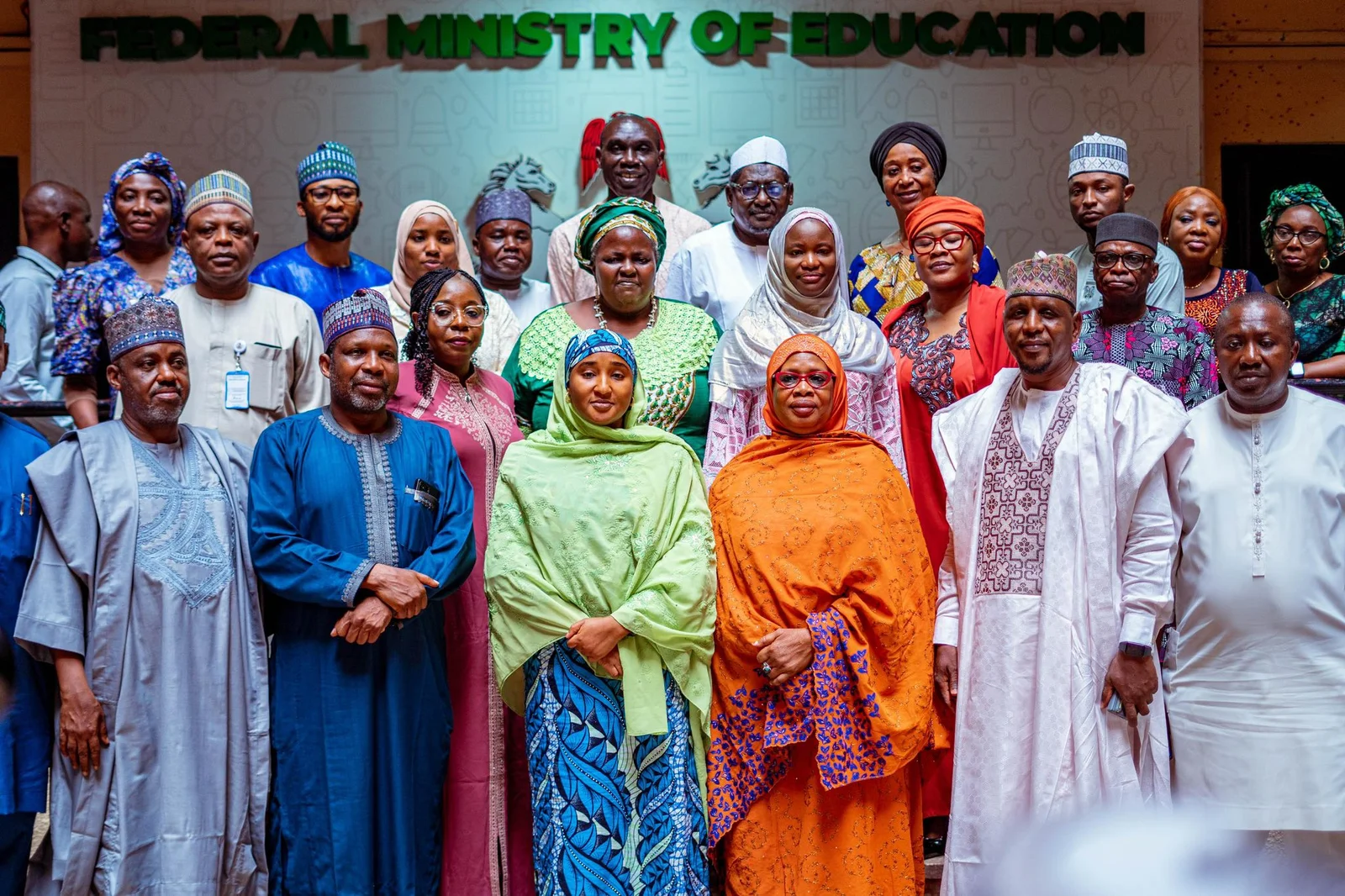
LUMINAH 2030 Initiative officially migrates to UBEC to ensure sustainability, scale girl-child education, and empower 1 million underserved girls by 2030
LUMINAH 2030 Initiative has formally transitioned from the Federal Ministry of Education to the Universal Basic Education Commission (UBEC) in a strategic move aimed at sustainability and broader impact.
Also read: Gombe SEC Approvals Boost Security, Agriculture, Education with N1.06bn Solar Project
Speaking at the opening of a five-day programme on the UBEC Migration and Establishment Agenda in Abuja, UBEC Executive Secretary Aisha Garba said the migration marks a new phase in Nigeria’s commitment to girl-child education and empowerment.

“LUMINAH illuminates the path to education and empowerment. It integrates schooling, skills training, caregiver support, and community engagement to address the root causes that have kept our girls out of school,” Garba said.
She was represented by UBEC’s Deputy Executive Secretary (Technical), Razaq Akinyemi.

The LUMINAH 2030 Initiative, launched in March 2025 with World Bank support, aims to educate and economically empower over one million underserved girls by the year 2030.
The programme also supports female caregivers with financial aid and vocational training while promoting gender-equitable policies.
Garba explained that while AGILE had successfully nurtured the programme, its international framework lacked the permanence needed to align with Nigeria’s education roadmap.
“By institutionalising LUMINAH within UBEC, we ensure that it will not fade away but endure,” she said, adding that the initiative aligns with UBEC’s 10-year strategic plan (2021–2030).
UBEC will work with state governments, CSOs, private sector actors, and local communities to scale the initiative across Nigeria.
Emphasis will be placed on accountability, real-time monitoring, and data-driven results.
“Our expectations are clear: to deliver an inclusive, scalable, and data-driven model that reaches the most marginalised girls,” Garba affirmed.
Currently, LUMINAH is active in 12 states, including Yobe, Taraba, Kano, Jigawa, Benue, FCT, Ebonyi, Anambra, Bayelsa, and Akwa Ibom.
Amina Buba, National Coordinator of LUMINAH, described the migration as a “strategic step toward sustainability and impact.”
“We are embracing a more specialised and flexible system that will deepen collaboration, enhance resource mobilisation, and ultimately deliver measurable impact,” Buba said.
Neem Foundation, an implementing partner, also reiterated its commitment to trauma-informed education, financial literacy, and market-relevant skills.
“True learning thrives when education is combined with healing, resilience, and empowerment,” said Minoe Duamwan, Senior Programme Officer, Neem Foundation.
As Nigeria battles educational exclusion and gender inequality, the LUMINAH 2030 Initiative stands as a beacon of hope and reform for millions of marginalised girls.
Also read: Nigeria Could Achieve Full National Literacy by 2031 Under Tinubu’s Education Policies, says Lagos lawmaker
UBEC’s leadership and coordination are now central to turning this vision into measurable reality.