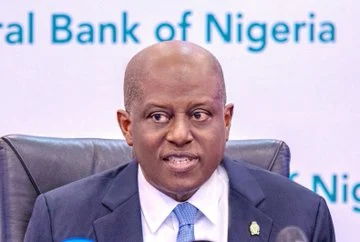
The Central Bank of Nigeria (CBN) has approved the participation of licensed Bureau De Change (BDC) operators in the Nigerian Foreign Exchange Market (NFEM), allowing each operator to purchase up to $150,000 weekly.
The directive was contained in a circular dated February 10, 2026, and signed by the Director of the Trade and Exchange Department, Dr. Musa Nakorji. It was addressed to authorised dealer banks and the general public.
Under the new arrangement, all duly licensed BDCs can access foreign exchange through any authorised dealer bank at the prevailing market rate.
“To ensure the availability of adequate foreign exchange liquidity in the retail segment of the foreign exchange market to meet the legitimate needs of end users, this is to inform market participants that all BDCs that are duly licensed by the CBN are allowed to access foreign exchange from the NFEM through any Authorised Dealer of their choice,” the circular stated.
Move to Narrow Rate Gap
The decision comes as the gap between the official and parallel market exchange rates widened by over N90 for the first time in three years.

Analysts say increased dollar supply to BDCs could help moderate volatility and improve liquidity in the retail segment of the forex market.
Strict Compliance Conditions
The apex bank, however, attached stringent compliance requirements to the approval.
Authorised dealer banks are mandated to conduct full Know-Your-Customer (KYC) and due diligence checks on BDCs before executing any forex sales.
“Authorised dealers are required to complete the necessary KYC and due diligence for their BDC clients in line with applicable regulations and the internal risk management framework,” the CBN said.
Upon meeting these requirements, BDCs may access foreign exchange strictly in line with existing operational guidelines, subject to a maximum of $150,000 per week per operator.
In addition, all licensed BDCs must submit timely and accurate electronic returns to the CBN in accordance with prevailing regulations.
To curb speculation and hoarding, the CBN directed that any unutilised foreign exchange must be resold to the market within 24 hours.
“BDCs are not permitted to keep funds purchased from NFEM in their positions,” the circular warned.
The bank further tightened settlement procedures, mandating that all forex transactions be conducted through settlement accounts held with licensed financial institutions.
Third-party transactions are prohibited, while cash settlements are limited to 25 per cent of each transaction amount.
Policy Shift After Earlier Restrictions
The move marks a significant shift from earlier restrictions.
In 2025, the CBN had limited BDCs to purchasing a maximum of $25,000 weekly from a single authorised dealer bank before suspending dollar sales to the segment altogether.
The suspension had drawn concerns from the Association of Bureau De Change Operators of Nigeria (ABCON), whose President, Aminu Gwadebe, previously lamented the difficulty operators faced in sourcing dollars, forcing many to rely solely on walk-in customers.
With the reopening of access — albeit under tighter regulatory controls — the CBN appears to be balancing broader market participation with stricter oversight as it seeks to stabilise and deepen Nigeria’s foreign exchange market.