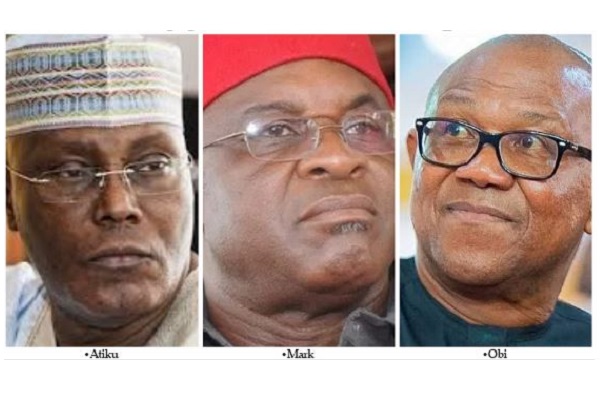
What began as a strategic effort to consolidate opposition strength following disputes in the Peoples Democratic Party (PDP) and the Labour Party (LP) has devolved into a three-way leadership battle within the ADC itself. Instead of emerging as a viable challenger to the ruling All Progressives Congress (APC), the party now faces uncertainty over whether it can even field candidates.
The crisis escalated dramatically on April 7, 2026, when Abia State chairman Don Norman Obinna publicly rejected both major factions within the party. Standing alongside several state chairmen in Abuja, he announced the formation of a rival interim leadership and endorsed the Independent National Electoral Commission’s (INEC) decision to withdraw recognition from all factions.

Declaring that “the ADC is not for sale,” Obinna distanced his group from figures associated with the party’s earlier coalition efforts, further deepening divisions.
Today, the ADC is effectively leaderless. Its constitution is under dispute, its structure fragmented, and three competing factions are laying claim to legitimacy—all with less than a year to the elections.

This turmoil marks a sharp reversal from the optimism of July 2025, when former National Chairman Ralph Nwosu and the National Working Committee stepped down in what was described as a strategic reset. The move ushered in a new interim leadership led by former Senate President David Mark, with former Osun State governor Rauf Aregbesola as secretary.
The development drew high-profile support and raised hopes of a unified opposition front. However, cracks soon emerged.
Critics questioned the legitimacy of the interim leadership, citing procedural irregularities, lack of formal ratification, and constitutional breaches—particularly provisions requiring party membership duration before holding national office. These concerns quickly escalated into legal disputes.
Nafiu Bala Gombe, the party’s former Deputy National Chairman, challenged the transition, insisting he remained the rightful successor. By September 2025, the disagreement had moved to the courts, transforming a political dispute into a protracted legal battle.
INEC initially recognised the Mark-led leadership but reversed its stance following a Court of Appeal ruling in March 2026, which ordered a return to the status quo pending final judgment. Interpreting this strictly, the electoral body withdrew recognition from all ADC factions and removed party officials from its records.
The decision has effectively paralysed the party.
Legal experts remain divided over INEC’s action. Some argue the commission misinterpreted the court ruling, while others believe its intervention has worsened an already volatile situation. Regardless, the result is a party unable to function as a unified entity.
The crisis has also sparked political accusations. Some ADC members allege interference by the ruling APC, claiming the internal divisions are being exploited to weaken the opposition. The APC has dismissed these claims, attributing the crisis to poor internal management within the ADC.
With INEC’s May 10 deadline for candidate submissions fast approaching—and the commission refusing to engage any faction—the stakes could not be higher. Without a recognised leadership, the ADC risks missing the الانتخابات entirely.
Observers warn that contingency plans, including defections to other parties, are already being considered. Others argue that time is simply running out.
The ADC’s troubles reflect a broader pattern across Nigeria’s opposition landscape. The PDP continues to grapple with internal disputes, while the Labour Party remains weakened after recent high-profile exits. Efforts to build a cohesive opposition bloc have repeatedly faltered.
Analysts caution that the implications extend beyond party politics. A weakened opposition could undermine democratic competition, leaving voters with limited credible alternatives.
As legal battles drag on and factions dig in, the ADC’s future now hinges on court decisions that may come too late to salvage its electoral prospects.
If unresolved, the party’s collapse could reshape the 2027 elections—not through voter choice, but through the absence of a viable opposition.