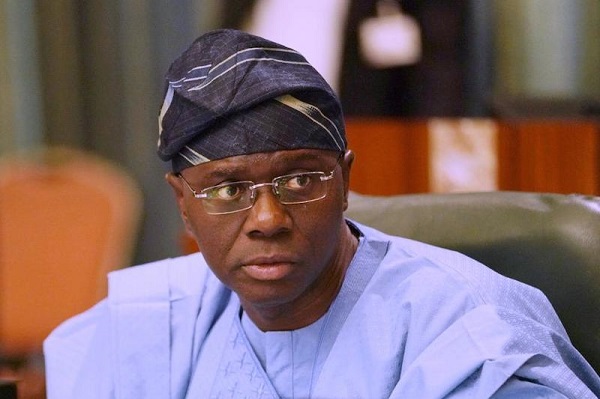
Babajide Sanwo-Olu’s reform-driven administration has received a major boost as Lagos State clinched the top spot in Nigeria’s latest ease of doing business ranking, reinforcing its status as the nation’s commercial powerhouse.
The ranking was unveiled at the 2026 Reform and Diplomatic Roundtable, organised by the Presidential Enabling Business Environment Council (PEBEC) in collaboration with development partners, including UK International Development and the Nigeria Economic Stability and Transformation Programme.
According to the report, Lagos scored 85.6 per cent to emerge first among all states, ahead of Kaduna, Oyo, the Federal Capital Territory, Ogun, Enugu, Plateau, Ekiti, Kano, and Nasarawa.

Director-General of PEBEC, Zahrah Audu, attributed the state’s top ranking to sweeping reforms, particularly in digitalisation and regulatory efficiency.
She highlighted the automation of land registration, tax systems, and payment platforms, which now allow businesses to complete transactions seamlessly online.

Audu also pointed to Lagos’ functional commercial court and alternative dispute resolution mechanisms as key drivers of investor confidence.
“The digitalisation of services and streamlined levies have made Lagos a model for other states,” she noted, adding that the council’s goal is to encourage reform across subnational governments rather than criticise underperforming states.
The 2025 PEBEC report further showed that Lagos’ sustained reforms have improved the business climate for both local and foreign investors, strengthening its role as a major economic hub in Africa.
Addressing stakeholders at the event, Governor Sanwo-Olu credited the achievement to deliberate policy actions and consistent infrastructure development over the past four years.
“This is the result of intentional efforts to create a positive environment for investments to thrive and deliver returns. We will continue to position Lagos as a truly business-friendly destination,” he said.
The state’s Commissioner for Commerce, Cooperatives, Trade and Investment, Folashade Bada, emphasised that the feat was driven by policy discipline and long-term planning under the Lagos State Development Plan 2052.
Key reforms include faster processing of construction permits, improved tax transparency, enhanced digital connectivity, and investments in transport and logistics infrastructure.
Minister of Budget and Economic Planning, Abubakar Bagudu, expressed optimism that Nigeria could achieve a $1 trillion economy through collaborative efforts between states and the private sector.
Meanwhile, Africa’s richest man, Aliko Dangote, reaffirmed investor confidence in Lagos, citing the state as the most peaceful environment for business in Nigeria. His multibillion-dollar investments, including the Dangote Refinery, underscore Lagos’ growing appeal as an investment destination.
From rising from 29th position just four years ago to clinching the top spot, Lagos’ transformation reflects sustained institutional reforms, policy consistency, and a strategic vision aimed at making the state Africa’s leading hub for enterprise and innovation.
As the current administration winds down, the latest ranking adds to a growing list of achievements shaping Sanwo-Olu’s legacy in governance and economic development.