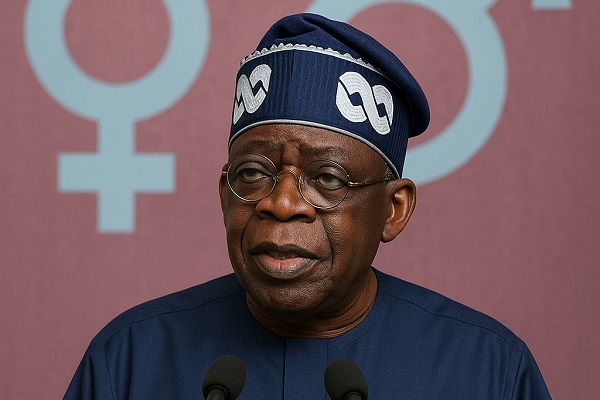
The Centre for a Better Society in Nigeria has thrown its weight behind the reform agenda of Bola Ahmed Tinubu, describing the administration’s policies as bold structural measures capable of repositioning Nigeria for long-term economic competitiveness.
The organisation made its position known during a conference held at its headquarters, where its President, Vincent Ibhaze, outlined key policy initiatives introduced by the current administration.
In a statement jointly signed by Ibhaze and the group’s Executive Secretary, Ken Obue, the centre identified the removal of fuel subsidy as one of the most significant policy decisions taken by the government.

According to the organisation, while the move triggered short-term economic adjustments and public debate, it was necessary to reduce fiscal pressure, curb systemic inefficiencies, and redirect government resources to infrastructure and social development.
The group also highlighted the government’s foreign exchange unification policy, noting that the reform is designed to stabilise the currency market, strengthen investor confidence, and eliminate distortions created by multiple exchange rate systems.

It further pointed to ongoing tax reform initiatives aimed at expanding revenue generation, simplifying tax compliance, and reducing the country’s reliance on borrowing, thereby enhancing fiscal sustainability.
On infrastructure, the organisation commended the administration’s focus on expanding transportation networks, improving power supply, and promoting digital innovation.
According to the statement, ongoing railway projects, road rehabilitation efforts, and reforms in the power sector form part of a broader strategy to boost productivity and stimulate industrial growth.
The centre also acknowledged social investment programmes such as the student loan scheme and targeted welfare interventions designed to cushion the effects of economic adjustments and improve access to opportunities for Nigerians.
On security, the organisation said the administration has strengthened collaboration with international partners, including the United States, particularly in intelligence sharing and counter-terrorism operations.
Ibhaze said sustained implementation of the reforms beyond the current administration could place Nigeria among leading global economies such as the United Arab Emirates, China and Singapore within the next two decades.
He emphasised that policy continuity, institutional strengthening and bipartisan cooperation would determine whether the reforms translate into measurable national transformation.
The organisation also urged opposition parties to avoid politicising structural reforms aimed at long-term national development, stressing that responsible political engagement and sustained policy implementation are critical for economic resilience and global competitiveness.