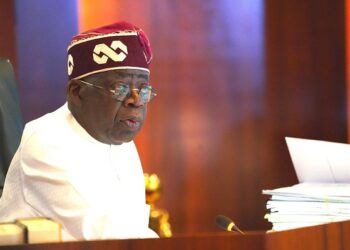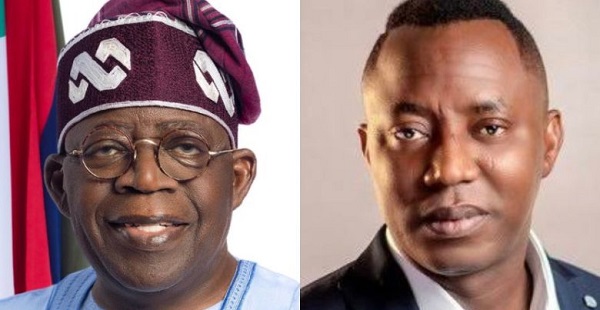
The cybercrime trial of politician and online publisher Omoyele Sowore commenced on Thursday, with the Department of State Services (DSS) telling the court that a social media post attributed to the defendant threatened public safety and generated nationwide tension.

At the opening of the trial, the prosecution called its first witness, Cyril Nosike, a DSS operative attached to the agency’s Cyber Space Monitoring Centre.
Nosike told the court that Sowore’s post, in which he described President Bola Ahmed Tinubu as a criminal, violated the provisions of the Cybercrimes (Prohibition, Prevention, etc.) Amendment Act, 2024.

Led in evidence by prosecuting counsel, Akinlolu Kehinde (SAN), the witness explained that his duties involve round-the-clock monitoring of online activities capable of undermining national security.
According to him, on August 26, 2025, he detected a post made by Sowore on his X (formerly Twitter) account, accompanied by a video of President Tinubu addressing business leaders in Brazil.
The post allegedly read: “This criminal @OfficialABAT actually went to Brazil to state that there is no MORE corruption under his regime in Nigeria. What audacity to lie shamelessly!”
Nosike said he downloaded the video and saved it on a flash drive, which he later identified in court alongside a certificate of compliance. The items were admitted into evidence by Justice Mohammed Umar, despite the defence reserving its objection.
Following an application by the prosecution, the court played the video clip in open court. The footage showed President Tinubu highlighting his administration’s achievements and urging Brazilian investors to consider Nigeria, citing improved governance and reduced corruption.
During the proceedings, the prosecution drew the court’s attention to Sowore’s alleged use of a mobile phone while standing in the dock. Justice Umar reprimanded the defendant, describing the action as inappropriate, and ordered that the phone be handed over to his lawyer.
Although Sowore initially resisted, he later sought and obtained the court’s permission to personally hand the device to his counsel.
Resuming his testimony, Nosike said he captured screenshots of public reactions to Sowore’s post, noting that the responses escalated tension online. He added that the DSS subsequently wrote to X and Meta, requesting the removal of the post, and also issued a formal letter to Sowore through his lawyers, asking him to retract the statement.
The witness further told the court that Sowore published the confidential DSS letter on Facebook, attracting widespread reactions that were disparaging to the agency and portrayed it negatively.
Copies of the letters and screenshots of online reactions were tendered and admitted as evidence.
Nosike maintained that such posts complicate the work of security agencies, stressing that inciting statements online pose serious challenges to national stability.
At the close of the witness’s testimony, Sowore’s counsel, Marshall Abubakar, sought an adjournment to study the evidence before cross-examination. Although the prosecution objected, the court granted the request.
Justice Umar adjourned the case until January 27 for cross-examination and continuation of trial.
Earlier, the defence had attempted to halt the proceedings, alleging non-compliance by the prosecution with disclosure orders. However, Abubakar later admitted service of the documents after reviewing proof provided by the court and apologised.
The matter then proceeded with the prosecution formally opening its case against Sowore.