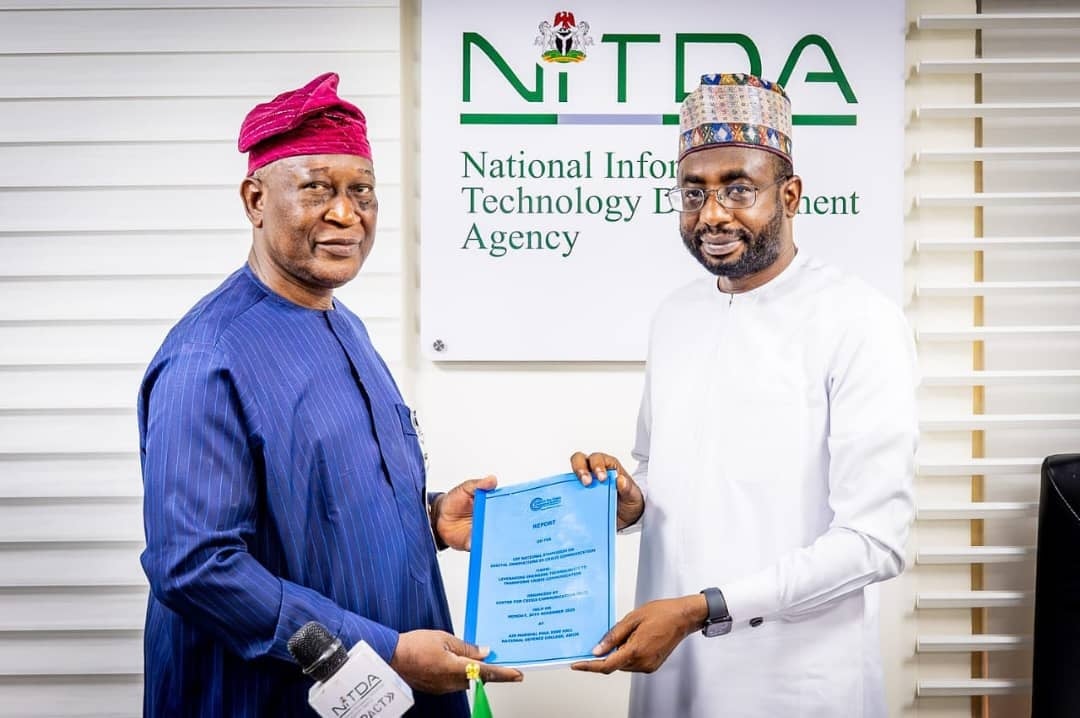

The Director-General of the National Information Technology Development Agency (NITDA), Kashifu Inuwa, has endorsed the creation of a centralised National Crisis Communication Hub (NCCH) to tackle rising threats of fake news, hate speech, and AI-driven misinformation in Nigeria.
Inuwa made the announcement while receiving a delegation from the Centre for Crisis Communication (CCC), led by Chairman Major-General Chris Olukolade (rtd.), following the successful conclusion of the first National Symposium on Digital Innovations in Crisis Communication.

The NITDA chief highlighted that misinformation often spreads faster than verified facts due to its “novelty factor,” warning that the disruption of traditional media by social platforms has enabled harmful content to proliferate, with serious economic and social consequences.
“There is a direct correlation between novelty and virality,” Inuwa said. “Misinformation is often packaged as something new or shocking, which allows it to outpace accurate information. The way forward is to build public trust through credible government action and strong, strategic partnerships.”
He also cautioned that AI-generated deepfakes and automated propaganda are likely to intensify ahead of the 2027 political season, making a coordinated national response mechanism increasingly urgent.
The CCC’s 12-point resolution was adopted as a framework, with NITDA outlining workstreams to fast-track the hub’s implementation. These include:
• Strengthening digital literacy and professional training for journalists, media professionals, and security spokespersons using platforms like Cisco NetAcad.
• Expanding crisis communication through regional symposiums to boost grassroots participation.
• Collaborating with global tech companies to enable rapid identification and removal of content threatening national security.
• Working with cybersecurity units of critical institutions to build multi-layered digital defences.
Major-General Olukolade said the hub would function as an independent, multi-stakeholder platform to monitor and counter harmful content during sensitive periods such as elections while protecting democratic principles and freedom of expression. He also advocated the development of mobile applications allowing citizens to report crimes and emergencies in real-time.
Inclusivity was a key focus, with both NITDA and CCC emphasising that digital innovations must amplify the voices of persons with disabilities and other marginalised groups, ensuring emergency alerts reach all citizens.
To operationalise the resolutions, NITDA and CCC agreed to form a joint working team to document agreements and drive implementation throughout 2026, positioning the hub as a cornerstone of Nigeria’s digital resilience against misinformation and emerging threats.